The problem
Minute-level electricity measurements contain temporal structure, missing values, and relationships between aggregate and sub-metered consumption. A useful model needs careful data preparation as well as a suitable architecture.
My contribution
I worked on preprocessing, Power Factor and Global Active Energy features, and the LSTM architecture and tuning. The final group model used two 128-unit LSTM layers with a dense prediction head and a 256-step input window.
Results in context
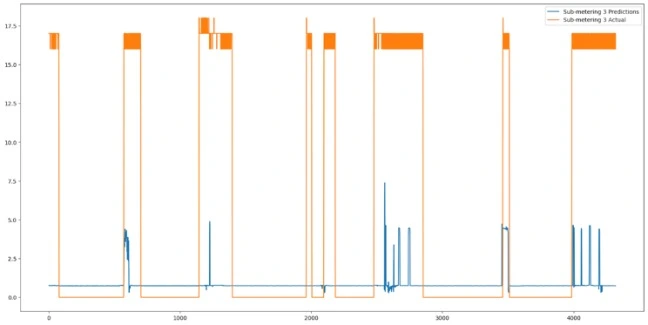
The report records a final test R² of 0.65 and MAE of 1.07 on the project’s target scale. Earlier model attempts performed poorly, making iterative diagnosis a central part of the work. Related assignments compared ARIMA, MLP, CNN, RNN, LSTM, GRU, TCN, and Transformer-based approaches across separate datasets.
Data preparation and sequence-model development
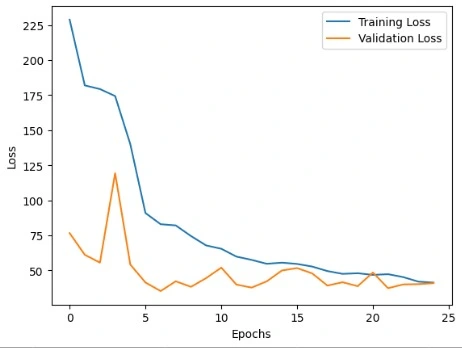
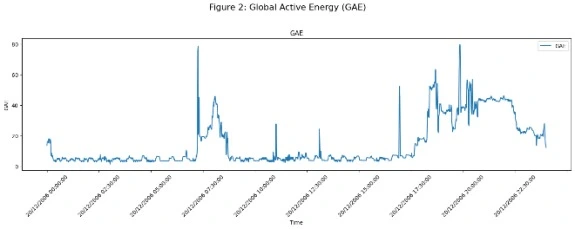
I worked on preprocessing and engineered features for the group’s household electricity forecasting project. pandas and NumPy supported time-indexed data preparation and calculations such as power factor and global active energy. TensorFlow / Keras implemented sliding-window LSTM models with Dense layers and dropout, trained in Google Colab. We iterated on window length and network structure, then compared predictions and training/validation behavior using MSE, MAE and R-squared. scikit-learn supported the surrounding preprocessing and evaluation workflow.