Two cardiac-device questions
I investigated cardiovascular support and cardiac electrical stimulation through two related MATLAB studies. The LVAD work examined blood flow, ventricular loading and pump control. The defibrillation work examined source waveforms and cardiac membrane voltage. They share a modeling and parameter-analysis approach, with separate physiological models and results.
LVAD · The question
A left ventricular assist device supplies flow alongside a weakened heart, but stronger pump support also changes the pressures and workload of the native ventricle. Our study examined this interaction under resting and exercise conditions using a simplified cardiovascular model.
LVAD · Comparing assisted and unassisted circulation
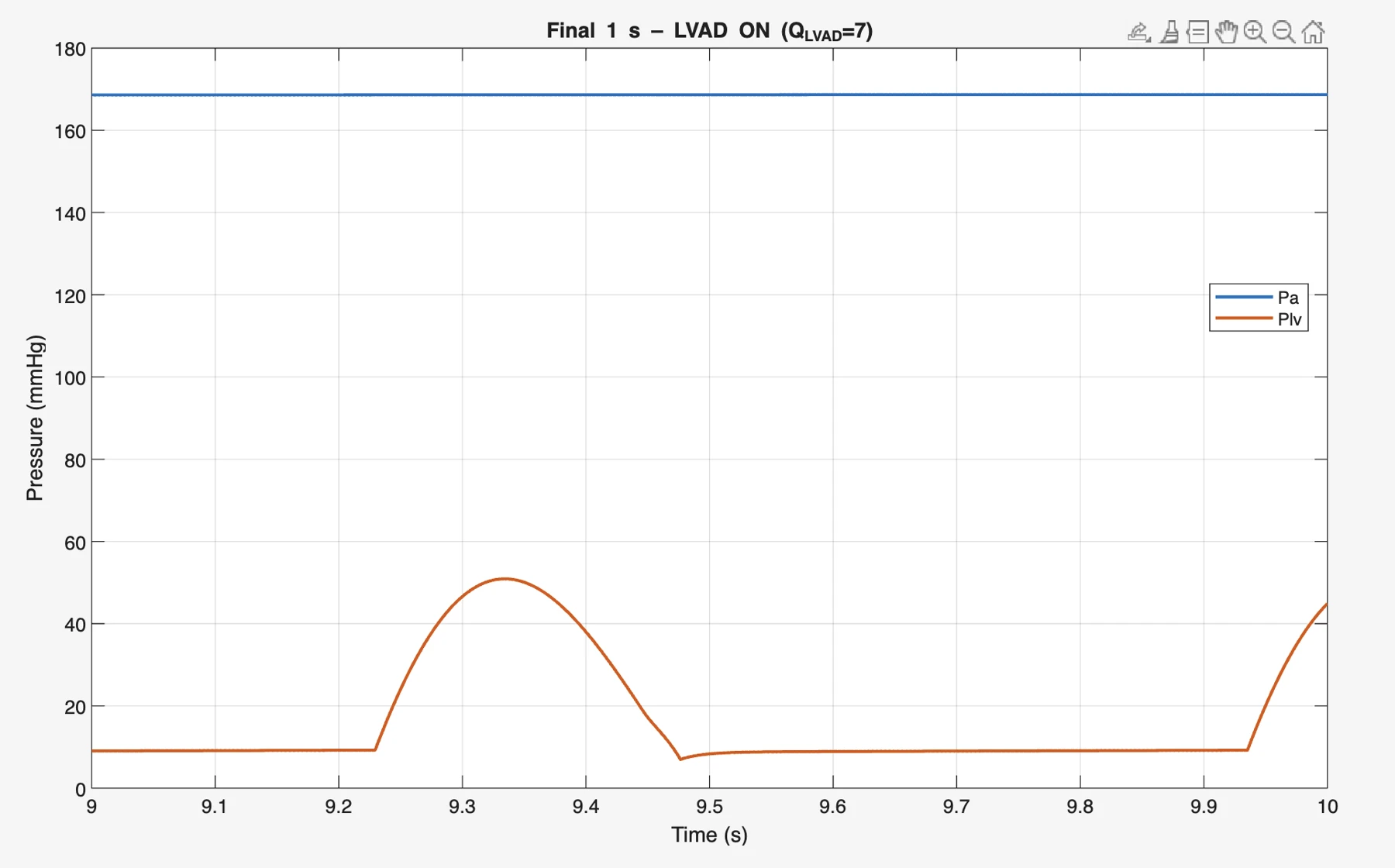
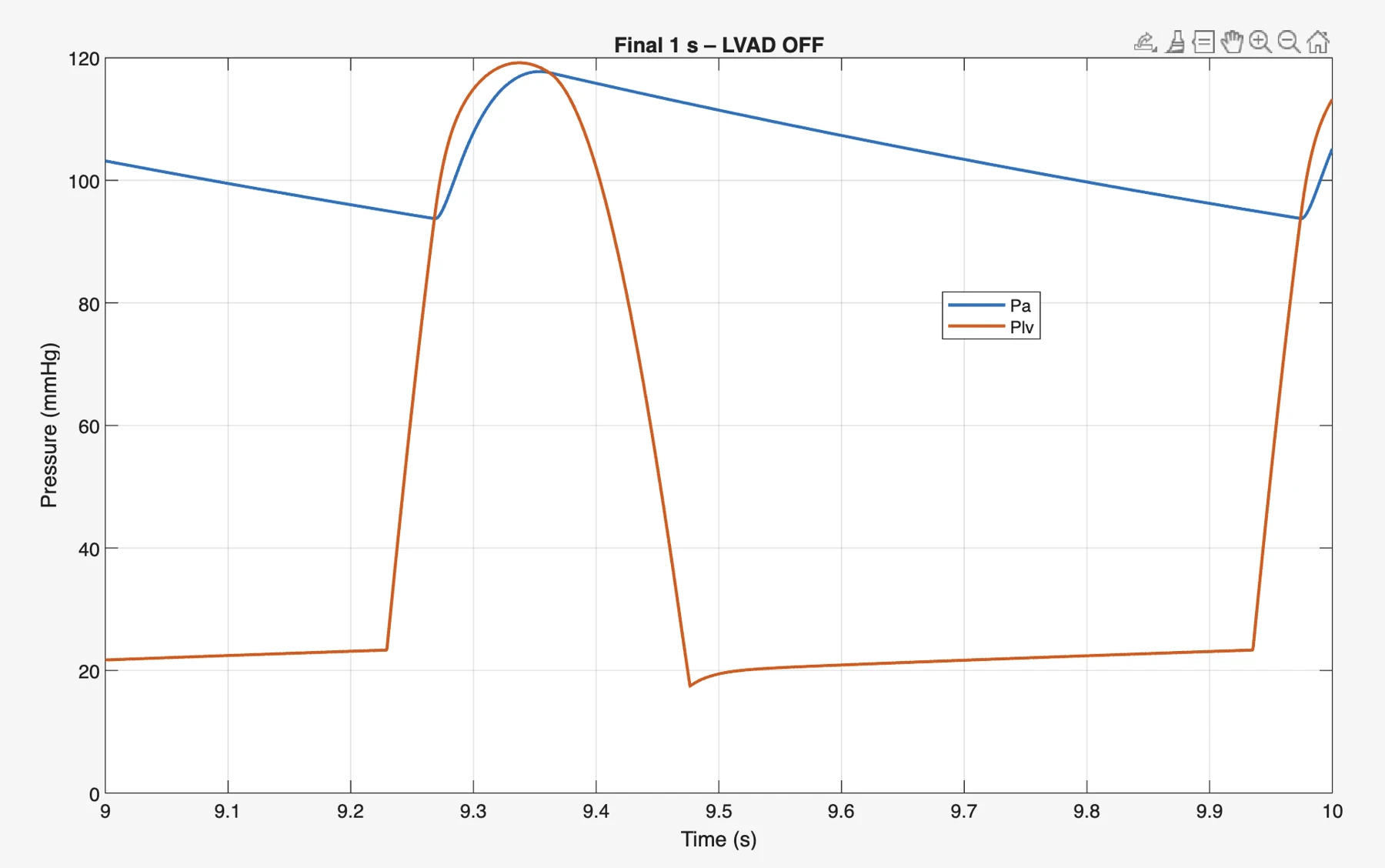
We varied the pump contribution and compared total systemic flow, ventricular pressure-volume loops, and ventricular and arterial pressure traces. The outputs show how increasing support can unload the ventricle until the pump supplies nearly all of the flow. Comparing the pressure traces with and without assistance helped explain when the aortic valve could open and why pulsatility changed.
LVAD · Physiologically responsive control
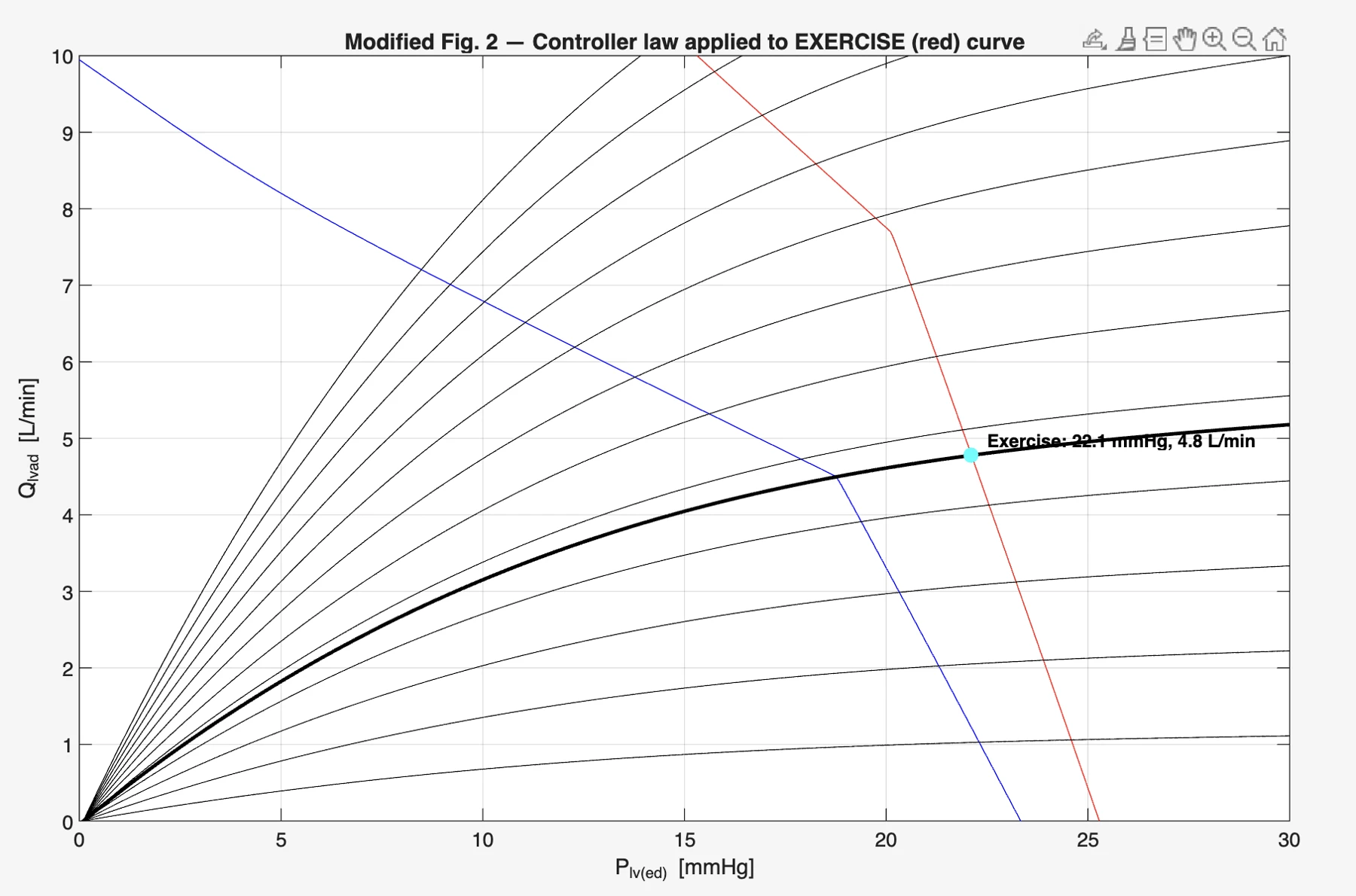
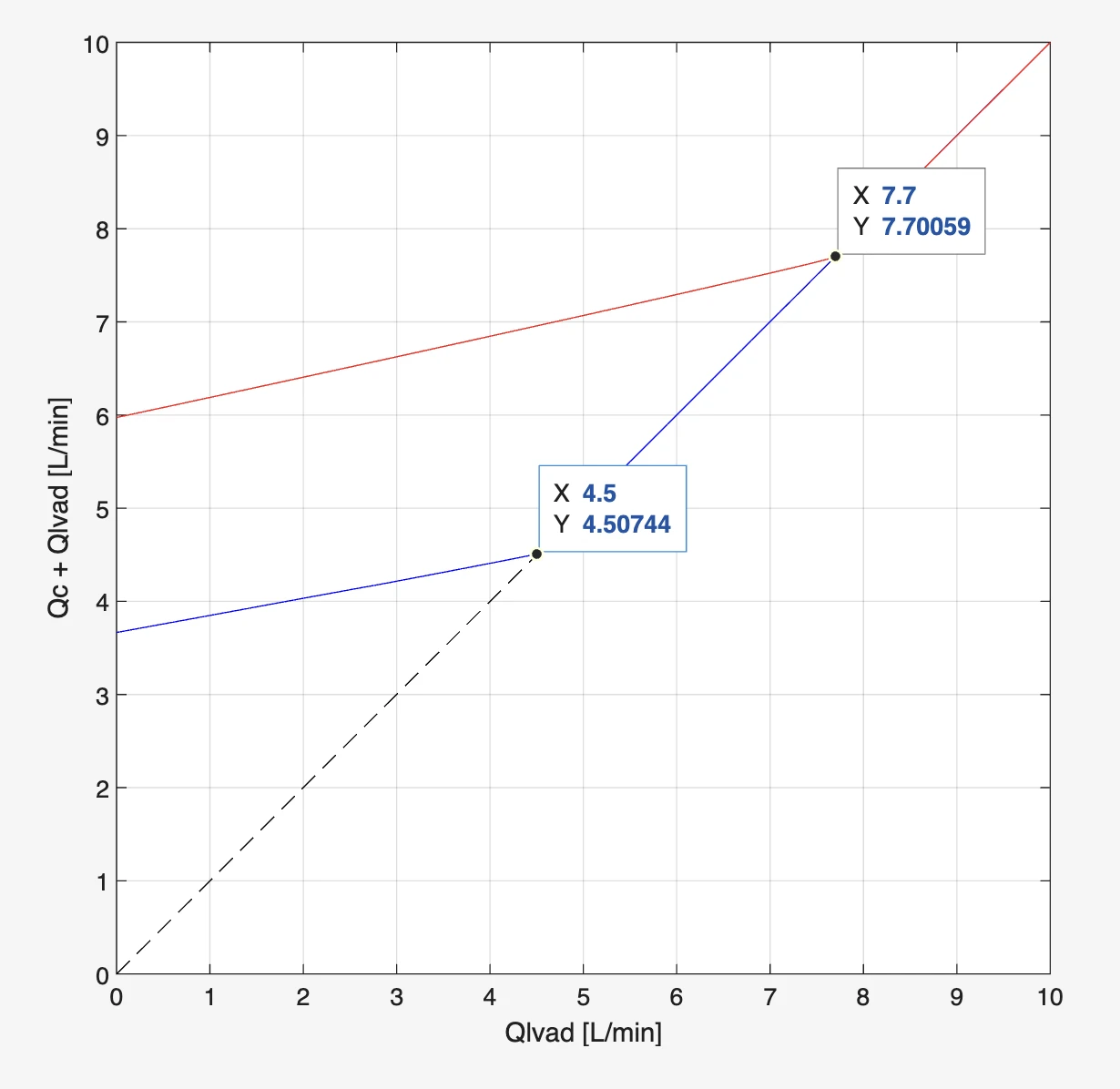
We then overlaid a Starling-like supervisory control law on the relationship between pump flow and end-diastolic pressure. The aim was to select a resting operating point and examine how that same controller responded to the increased demand represented by the exercise model, while retaining a contribution from the native heart.
LVAD · Interpreting the model
The report compares the model’s baseline filling-pressure behavior with a reference example and discusses the consequences of that mismatch. The investigation treats the outputs as simulation results: the simplified circulation, fixed parameters, and limited physiological feedback restrict how far the controller findings can be generalized.
LVAD · Simulation and physiological interpretation
I used MATLAB scripts to investigate ventricular assistance by varying pump flow and comparing pressure, flow and ventricular-volume waveforms. The supplied cardiovascular model uses a Windkessel representation and time-varying ventricular elastance. Batch runs and pressure–volume analysis helped explain how increasing LVAD support changes the ventricle’s contribution to circulation. A subsequent control investigation related pump flow to end-diastolic pressure, keeping the model’s simplifications and validation limits explicit.
Defibrillation · Waveform timing and membrane response
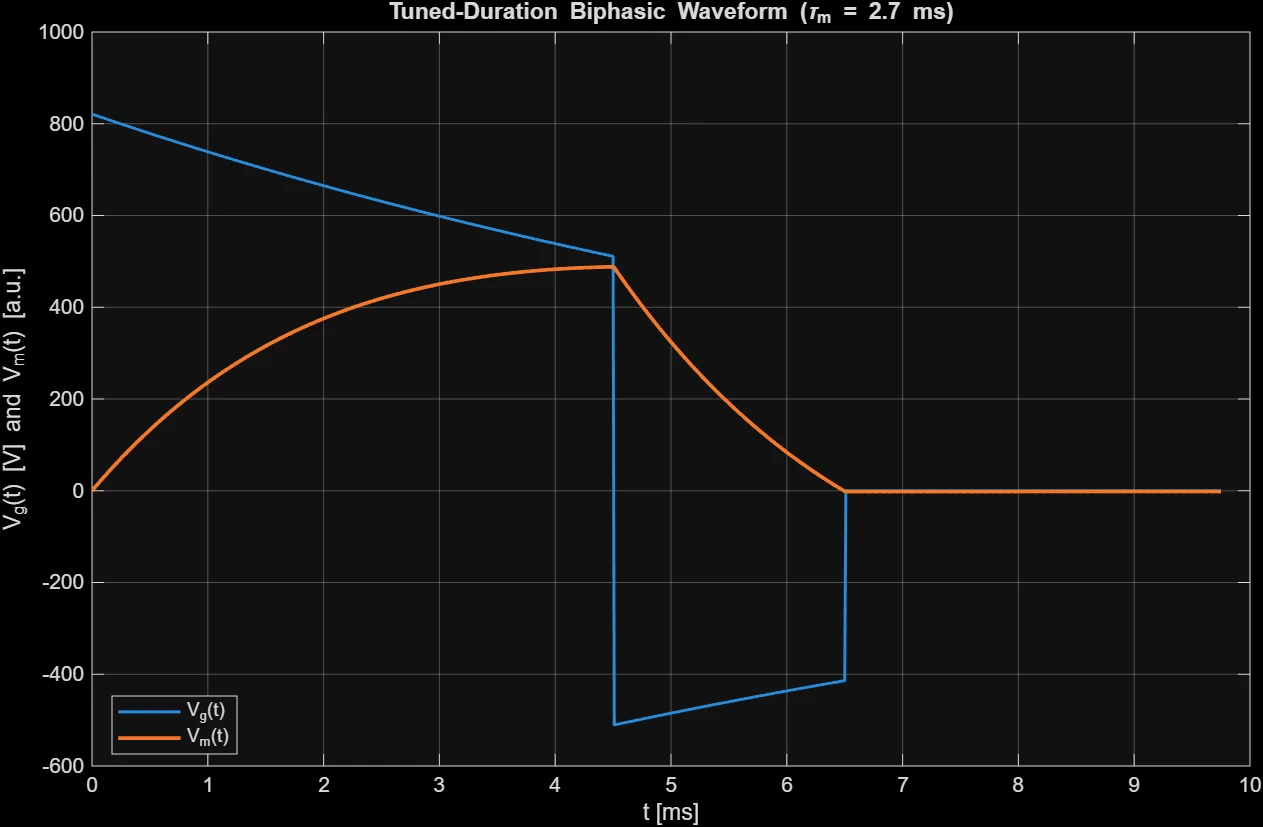
The investigation compared two ways of defining a biphasic exponential waveform: ending each phase at a specified voltage tilt, or choosing its duration directly. A cardiac-cell electrical model connected the applied source waveform with the resulting membrane-voltage response.
Defibrillation · What we investigated
We examined the source time constant and energy-storage assumptions, swept the membrane time constant, and compared the membrane response at the end of each phase. The first phase was assessed for depolarization and the second for the residual membrane response after the polarity reversal.
Defibrillation · Matching the two parameterizations
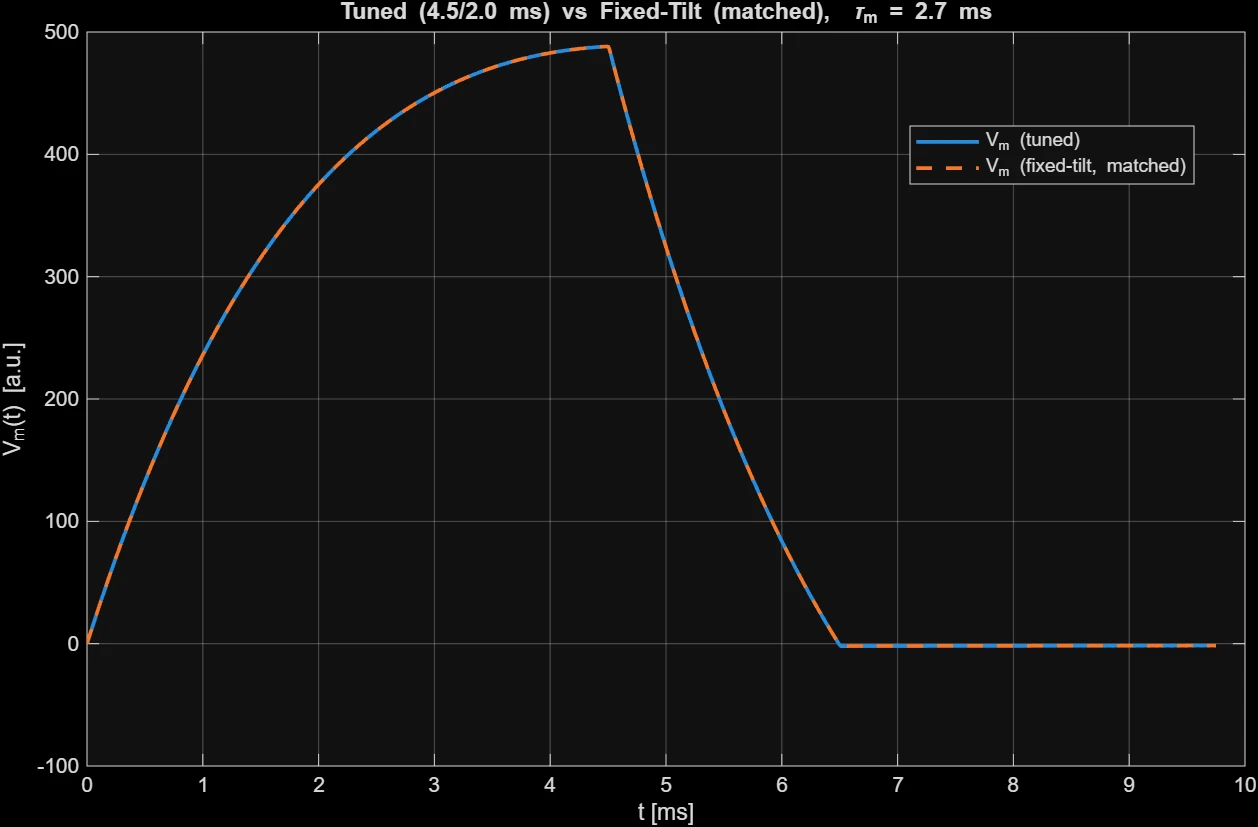
The final comparison converted chosen phase durations into their corresponding tilt values and ran both formulations with the same source assumptions. The resulting membrane-voltage curves nearly coincide, illustrating that matched fixed-tilt and tuned-duration settings can describe the same underlying exponential waveform.
Defibrillation · Project scope
The deliverables were MATLAB calculations, waveform overlays, and a written interpretation of the electrical model. These are educational simulation results rather than device testing or clinical validation.
Defibrillation · Waveform construction and response analysis
The MATLAB study constructed biphasic exponential source waveforms and examined their modeled cardiac-cell membrane response. I investigated waveform tilt, phase duration and timing, using response plots and parameter comparisons to explain how a change at the source altered membrane voltage. The report figures distinguish the applied shock waveform from the modeled membrane response; the analysis does not establish a clinical defibrillation protocol.